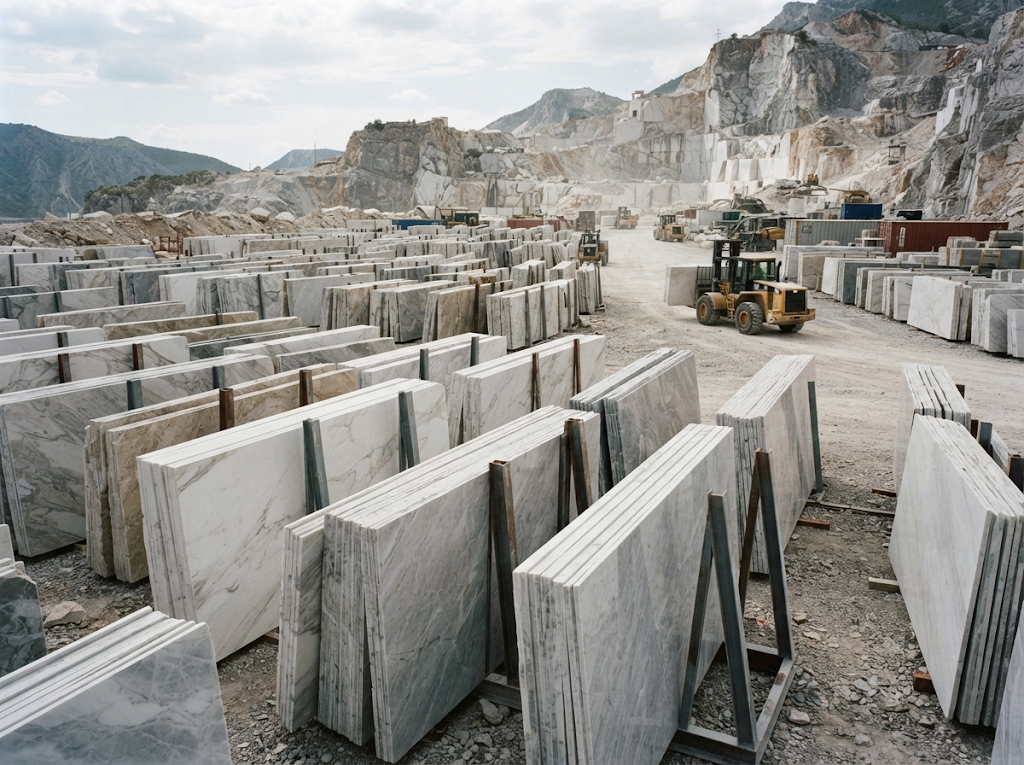
Turkey sits on some of the richest stone reserves in the world. From the white marble of Afyon and Marmara to the travertine of Denizli and the beige limestone of Burdur, quarries supply slabs that end up on the floors of airports in Doha, in hotel lobbies in Dubai and in kitchen worktops in Chicago. A Turkish exporter who sells stone abroad deals with architects, importers, shipping lines and customs, and each of them needs a document that says exactly what is in the container. Stone is sold by the slab but judged by the paperwork, because a block that looks perfect in the quarry can become a dispute if the specification says something different on arrival. This guide explains how Turkish stone producers can prepare English commercial and technical documents.
Who Reads the Paperwork
Buyers range from architects who specify a stone for a building to wholesalers who purchase by the container. Each has different needs. Architects look at technical data and samples, importers look at prices, grades and delivery times, and customs officers look at codes, weights and origin. A single set of documents must satisfy them all.
Technical Data Sheets
A good data sheet gives the stone name, the geological type, the colour, the finish, the dimensions, the thickness tolerance, the density, water absorption, compressive strength, flexural strength and slip resistance, with the test standards used. Terms for finishes such as honed, polished, brushed and flamed, and for formats such as slab, tile and block, must be used consistently. The international standards body at iso.org and European standards organisations publish the test methods that buyers expect to see quoted.
Grades, Names and Samples
Stone trade names are often local or marketing names, and the same stone can have several. Give the commercial name, the technical type and the quarry of origin. Explain how you grade slabs, what defects are accepted and how colour variation is handled. Provide physical samples and photographs of full slabs, because small samples can mislead about veining and pattern.
Contracts and Commercial Documents
Sales contracts, proforma invoices, packing lists and bills of lading carry legal weight. They must agree with each other on quantity, weight, description and value. Incoterms define who pays for transport and insurance, and misunderstanding them is expensive. A reliable provider of turkish to english translation services can prepare matching English versions of contracts, certificates and specifications, so that the Turkish original and the English text agree line by line.
Certificates, Quality and Origin
Buyers may ask for certificates of origin, quality certificates, laboratory test reports and declarations of conformity. Keep a file for each shipment, with the date, the lot numbers and the names of the testing institutions. Where certified translations are requested, check with the importer which format they need. For related reading on how official documents are managed in cross-border work, see this article on bank statement translation.
Packing, Loading and Claims
Stone is heavy and breakable, and damage claims are common. Document how slabs are packed, which bundles and crates are used, how they are strapped and how containers are loaded. Photographs at loading help in case of a claim. State the rules for reporting damage, the deadlines and the evidence required. A clear procedure reduces disputes and keeps relationships healthy.
Customs and Export Rules
Export documents must describe goods correctly, with the right tariff codes, weights and values. Mistakes can delay a shipment at a port for weeks, and storage costs accumulate. Keep a template for each product type, and have a customs broker review it. Provide buyers with a short guide on documents they should expect with each shipment.
Health, Safety and the Environment
Quarries and factories face rules on dust, noise, water and rehabilitation of sites. Foreign buyers increasingly ask for information about environmental management and worker safety. If you have certificates or reports, present them in plain English with dates and scope. Avoid vague claims, and be ready to answer questions from auditors and customers.
Trade Fairs and Showrooms
Stone fairs in Izmir, Verona and Xiamen are where many deals begin. Prepare a bilingual catalogue with photographs, technical summaries and contact details, and train staff to explain the difference between marble, limestone and travertine in simple words. Follow up each contact with the right data sheets within a few days.
Websites and Digital Catalogues
Photographs sell stone, but text makes it findable. Write titles and descriptions in the words buyers use in search, and include the stone type, colour, finish and application. Add a downloadable data sheet and a short guide on care and maintenance. Keep English pages updated with every new product.
Trust Built on Detail
Create a glossary of stone terms, a standard template for data sheets and a checklist for export documents. Review them each season. A producer that documents its stone as carefully as it quarries it becomes the supplier that architects name in their specifications, and that is where long-term business is made.